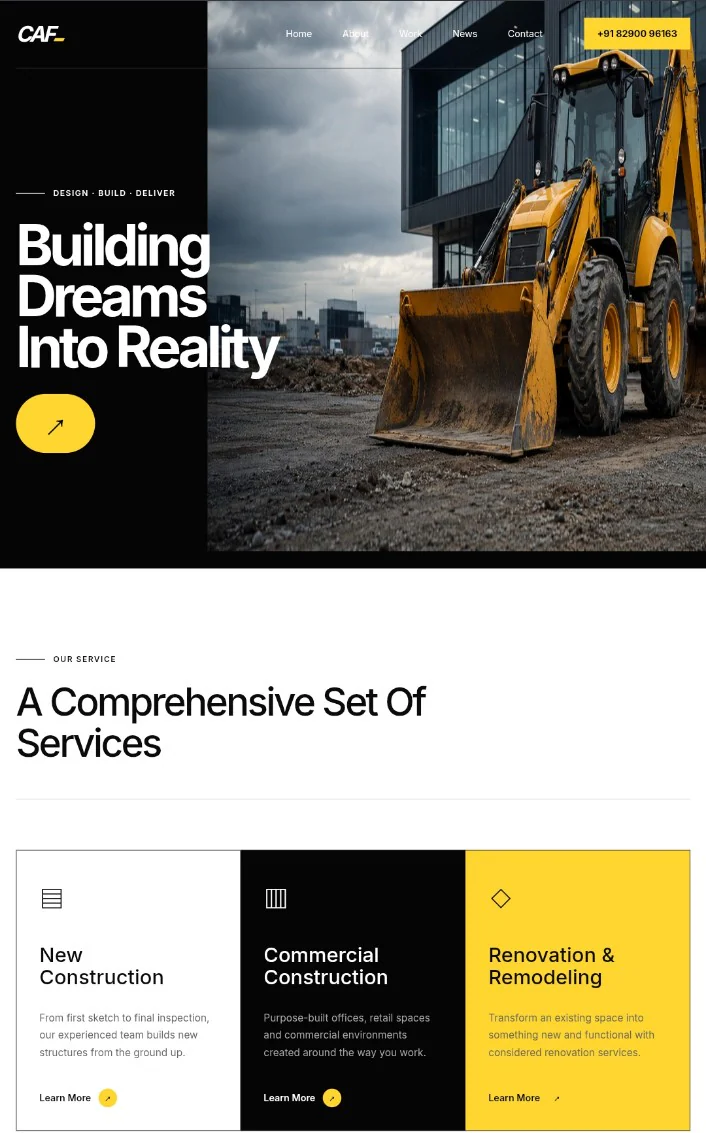
01
The trust problem
Construction decisions carry cost, schedule and execution risk. A prospect needs more than a dramatic building photograph; they need to know the category of work, service area, operating process and evidence behind the claims.
The concept uses visual scale to earn attention, then moves toward practical explanations. A production version would replace illustrative material with permission-based projects, credentials and contact details.
02
The page hierarchy
- Immediate statement of construction focus
- Project-led visual proof area
- Service or capability categories
- Process language that explains the next step
- Contact action suited to project enquiries
- Mobile layouts that preserve the visual impact
03
What genuine proof should look like
Real project pages should name the type of work, location when permitted, scope, constraints and the company's role. A gallery without context can look impressive while telling the buyer very little.
Certifications, registrations, safety information, partner logos and testimonials should appear only when current, relevant and permitted. Project Monet would not invent a project value, completion date or client quotation to fill the layout.
04
Production considerations
A live construction site may need separate pages for residential, commercial, renovation or turnkey work; downloadable capability documents; hiring; tender enquiries; and multiple office locations.
The final scope depends on the actual sales process. A business that qualifies projects by phone needs a different form from one that requires drawings, budget range and a formal brief.
Questions
What business owners usually ask
Is this an actual construction client website?+
It is a speculative concept and is labelled accordingly. It does not represent a client relationship or business outcome.
Can real project case studies be added?+
Yes. They should use accurate project information, approved photography and permission to identify the client or location where relevant.
Should every construction service have its own page?+
Only when the service has distinct buyer questions and enough accurate information to justify a useful page. A thin list of near-duplicate pages is not helpful.
Can the enquiry form collect project details?+
Yes. Useful fields may include project type, location, stage, estimated scope and preferred contact route, provided the business can protect and act on that information.