01
An editorial rhythm for visual work
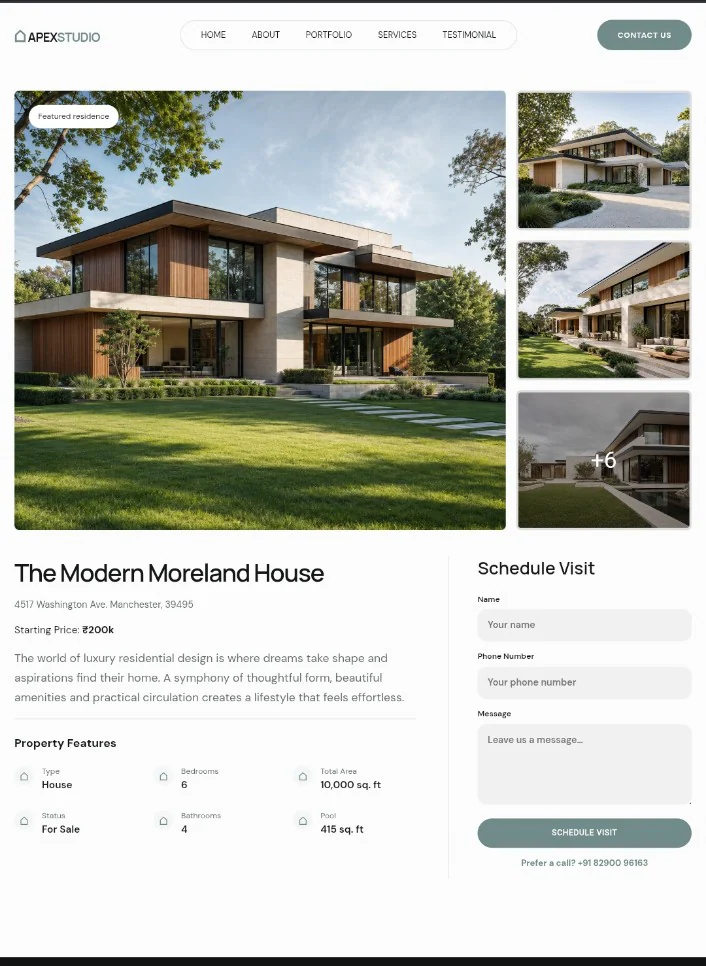
Interior portfolios can become dense mosaics where every project competes at once. This direction uses scale, spacing and a restrained typographic system so each space has a moment and the brand feels considered.
The visual pause is not an excuse to hide business information. Service types, location, process and enquiry expectations still need clear language.
02
The structure
- Project-led opening image and positioning
- Curated portfolio rather than an endless gallery
- Services separated by real scope
- Process explanation from consultation to delivery
- Designer or studio introduction
- Enquiry path that asks for useful project context
03
Photography and ownership
The business should use images it owns or has permission to publish. Each project can include location, type, design role, constraints and scope when the client has approved disclosure.
Stock imagery can communicate a temporary mood during concept work, but it should not be presented as a completed studio project. The final site should make that distinction unmistakable.
04
Qualifying the right enquiry
Interior enquiries often need more context than a name and phone number. A thoughtful form can ask for project type, location, approximate size, desired service and stage without becoming a thirty-question barrier.
The studio should decide which information genuinely helps the first conversation. Budget questions can be useful when phrased carefully and supported by an explanation of what the range means.
Questions
What business owners usually ask
Are the interiors shown Project Monet projects?+
No. This is a website-design concept, and it does not claim ownership of the interior projects or client outcomes shown in the demo direction.
Can a real portfolio replace the concept images?+
Yes. Original, permission-based work should become the centre of a production interior-design website.
Should every project have its own page?+
Selected projects benefit from deeper stories when there is meaningful context. A smaller practice can begin with a curated portfolio and expand later.
Can the site collect detailed project briefs?+
Yes. The form should collect only information the studio needs and can protect, with a clear privacy notice and sensible follow-up process.